Guide
No hot water but heating works: what to check
Heating fine but taps running cold? How to diagnose by system type: combi diverter valves, cylinder motorised valves, thermostats and immersion heaters. Safe checks first.
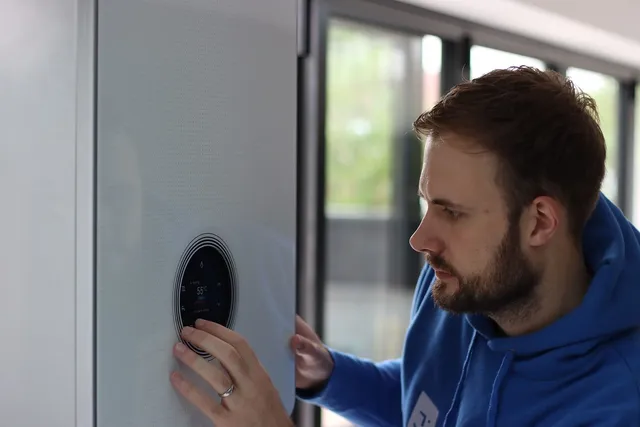
Radiators piping hot, shower running cold. It is a strange combination, and it confuses people because the boiler is obviously working, you can hear it, the heating proves it, yet the taps disagree. The upside of that strangeness is that it tells us a lot. If the boiler can heat the radiators, then the burner, the pump and the gas supply are all fine. The fault is almost always in the part of the system that decides where the heat goes.
Which part depends on what type of system you have, so start there.
First, work out what system you have
A combi boiler heats water on demand, the moment you open a hot tap. There is no hot water cylinder anywhere in the house. Most Manchester flats and a large share of terraces converted in the last twenty years run combis.
A system or conventional boiler heats a hot water cylinder, usually in an airing cupboard, and the taps draw from that stored supply. Conventional (heat-only) systems also have tanks in the loft.
The diagnosis is completely different for each, so pick your section below.
Combi boiler: heating works, taps run cold
On a combi, one component sits at the centre of this fault: the diverter valve. Inside the boiler, this valve switches the heat between two jobs. Heating on, it sends hot water round the radiators. Hot tap open, it is supposed to snap across and send everything to a small heat exchanger that heats your tap water instead. Hot water always takes priority, which is why the radiators pause when someone showers.
When a diverter valve sticks, wears or tears its diaphragm, the boiler keeps doing whichever job the valve can still reach. Heating but no hot water is the classic symptom. Interestingly, so is the reverse, and so is hot water only when the heating happens to be on, because the valve is jammed on the heating side and heat is sneaking across.
The other regular offender is the flow sensor, a small turbine that spins when you open a hot tap and tells the boiler to fire. If it is stuck or scaled up, you open the tap and the boiler simply never gets the message. The tell here: the boiler does not even attempt to fire when you run the hot tap. With a diverter fault, you can often hear the boiler fire and then the water still runs cold or lukewarm.
Before assuming either, run these safe checks:
- Check the pressure gauge. Some boilers will run heating on low pressure but refuse hot water, and some lock hot water out first. Below 1 bar, top up via the filling loop and retest.
- Check the display for a fault code and note it down, it saves diagnostic time when you call.
- Check the hot water temperature setting on the boiler. It sounds daft, but dials get knocked. Make sure the tap symbol setting is not turned to minimum.
- Try more than one hot tap. If the kitchen runs cold but the bathroom runs hot, the problem is that tap or its pipework, not the boiler.
- Listen when you open a hot tap. Boiler fires but water stays cold: diverter territory. Boiler does nothing at all: flow sensor territory.
Both parts live inside the boiler casing, and that is where your involvement rightly ends. All work inside a gas boiler is carried out by Gas Safe registered engineers. The repair itself is routine for our boiler repair manchester team, diverter valves and flow sensors are among the most common parts we replace, and it is a repair, not a death sentence for the boiler.
System boiler with a cylinder: heating works, cylinder stays cold
With a cylinder, the switching happens outside the boiler, which puts more of the diagnosis within your safe reach.
Check the programmer first. Heating and hot water are separate channels on the timer. It is surprisingly common after a power cut, a clock change or a fiddled schedule for the hot water channel to be off or set to strange hours. Set hot water to constant as a test.
Check the cylinder thermostat. A dial strapped to the side of the cylinder, usually behind the insulation jacket, normally set around 60 to 65 degrees. If it has been knocked down low, or has failed, it never calls for heat. Turn it up and listen for a click and the boiler firing.
Check the motorised valve. This is the big one. On the pipework near the cylinder you will find one or two boxes with a small lever, either a three-port (Y-plan) valve that shares heat between radiators and cylinder, or separate two-port (S-plan) valves. When the hot water side sticks shut, you get exactly this fault: radiators fine, cylinder cold. With hot water calling, feel the pipe after the valve, if the boiler is running but that pipe stays cold, the valve is not opening. Often it is just the motorised head that has failed, which is a quick, inexpensive swap for an engineer, done without draining the system.
Use the immersion heater in the meantime. Most cylinders have an electric immersion element as a backup, switched from a labelled fused spur nearby. Turn it on and you will have hot water within the hour regardless of the fault. If the immersion heats the water fine, you have also just proved the cylinder and taps are healthy, which narrows the fault to the valve, stat or programmer.
One honest caveat on older cylinders: if yours is decades old, uninsulated or already weeping at the fittings, it may be worth thinking bigger than the immediate fault. Our hot water cylinder replacement manchester page covers the options, including modern unvented cylinders that give mains-pressure showers, which is a genuine upgrade in a lot of the older semis we work in across south Manchester.
When it is an emergency and when it can wait
Be honest with yourself about urgency, because it changes what you should do. A family with a working immersion heater can book a repair for a convenient day. A cold house is fine here too, because by definition your heating still works.
But no hot water at all, no immersion backup, and small children or someone vulnerable in the house is a different matter, especially midwinter. That is what our no hot water emergency service exists for, and it runs 24 hours across Greater Manchester.
What to tell us when you ring
You will get a faster, cheaper fix if you can answer these: combi or cylinder, any fault code on the display, does the boiler fire when you open a hot tap, does the immersion work, fully cold or lukewarm. Two minutes of checks on your side regularly saves half an hour of ours, and since we are honest about pricing, that saving is yours. Ring us on 0161 533 0201 and we will get your hot water back.
Frequently asked questions
Why do I have heating but no hot water on my combi boiler?
Nine times out of ten it is the diverter valve, the component inside the combi that switches the boiler's output between the radiators and the hot tap. When it sticks or the diaphragm wears, it can serve one side but not the other. The other common culprit is the flow sensor that tells the boiler you have opened a hot tap. Both are internal boiler parts, so it is an engineer job, but it is a repair rather than a new boiler.
Can I fix a diverter valve myself?
No, and please do not try. The diverter valve sits inside the boiler casing, and opening the casing on a gas boiler is not a DIY job. All work on the gas side is carried out by Gas Safe registered engineers. What you can safely do is the diagnosis: confirm the pattern, check the pressure and the controls, and tell the engineer what you found, which genuinely speeds the repair up.
My hot water works on the immersion but not from the boiler. What does that mean?
That is actually useful news. The immersion heater proves the cylinder, the pipework and the taps are all fine, so the fault sits between the boiler and the cylinder: usually the motorised valve not opening for hot water, or the cylinder thermostat not calling for heat. The immersion also means you have hot water in the meantime, so it is a booked repair rather than an emergency.
How much does it cost to fix no hot water?
It depends entirely on the part. Motorised valve heads and cylinder thermostats are at the cheaper end of heating repairs. Combi diverter valves cost more because of the labour of working inside the boiler. We diagnose first and quote before touching anything, so you know the figure before we start. On a very old cylinder or boiler we will tell you honestly if the repair money would be better put towards replacement.
Why does my hot water only go lukewarm rather than fully cold?
Lukewarm usually means a partial fault: a diverter valve that only travels halfway, a motorised valve stuck mid-position, or on a combi a part-scaled plate heat exchanger, which is common in harder water and in systems full of sludge. It is worth mentioning lukewarm rather than cold when you ring, because it changes what we look at first.
Services that can help
Need a plumber in Manchester today?
Call us for a fast, honest quote. We cover Greater Manchester 24 hours a day, and we answer the phone.