Guide
Frozen condensate pipe: how to thaw it and stop it happening again
Boiler locked out on a frosty morning? How to spot a frozen condensate pipe, thaw it safely with warm water, and lag or reroute it so it never freezes again.
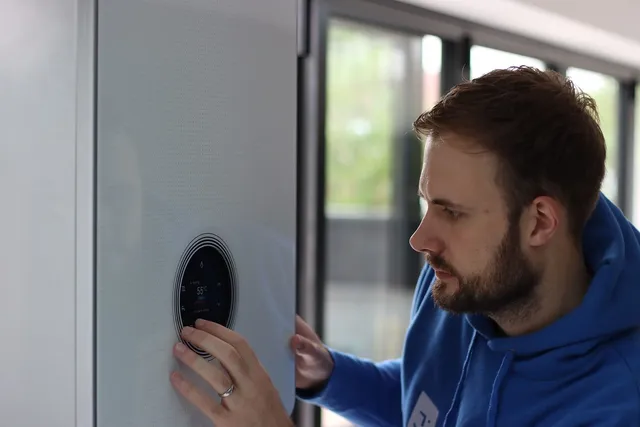
Every winter, usually the first morning Manchester wakes up to a hard frost, our phones go mad with the same call: the boiler was fine last night, now it is dead, and it is making an odd gurgling noise. We see this every December through February without fail, and in the bad cold snaps we get dozens of these calls in a single morning.
Here is the thing we tell every one of those callers: this is one of the few boiler faults you can genuinely fix yourself, in about ten minutes, with a kettle of warm water. So before you queue for an engineer on the coldest day of the year, read this.
What the condensate pipe is and why it freezes
Every modern condensing boiler produces a steady dribble of slightly acidic waste water as it runs, a couple of litres on a cold day. That water drains away through a plastic pipe, usually white or grey, 21.5mm or 32mm, which runs from the bottom of the boiler to a drain. In a lot of installations, especially where the boiler is on an outside wall, that pipe exits through the wall and runs down the outside of the house to a gully or drain.
That outside section is the problem. The water moves through it in small trickles rather than a flush, so on a freezing night it turns to ice a dribble at a time, layer on layer, until the pipe is blocked solid. The boiler tries to fire, the condensate cannot drain, it backs up inside the boiler, and a sensor shuts everything down. That backing-up is the gurgling or slurping sound you can hear.
The boiler is not broken. It is doing exactly what it is designed to do, refusing to run until the blockage clears.
How to spot it
Three signs together make this diagnosis near enough certain:
- Timing. The boiler worked yesterday and the temperature dropped below zero overnight. This fault does not appear in mild weather.
- The noise. A gurgle, slurp or bubbling sound from the boiler as it attempts to fire, then a lock-out.
- The fault code. Most boilers throw a specific code: EA on many Baxi and Main boilers, F28 or F29 on Vaillant, D5 or 133 series codes on Worcester Bosch, E133 on some others. Your manual will confirm, but any ignition or condensate fault code on a frosty morning points the same way.
Then go outside and find the pipe. Follow the plastic pipe from the bottom of the boiler through the wall and down to the drain. Feel along it. A frozen section is often visibly frosted, and the ice usually forms at the most exposed points: the open end above the drain, any bend or elbow, and shallow horizontal runs where water sits.
How to thaw it, step by step
- Switch the boiler off at its own controls. No point letting it keep attempting to fire while you work.
- Warm some water. Hand-hot from the tap is ideal, a kettle boiled and then left to cool for ten minutes is fine. Never boiling. Boiling water can crack the plastic and it freezes into an ice sheet under your feet within minutes.
- Pour the warm water along the frozen section, starting at the bottom end near the drain and working up. The ice usually lets go with a couple of jugfuls. A hot water bottle or a microwaveable heat pack held against the pipe works just as well and is the better option for a section you cannot easily pour onto.
- Check the open end. The last inch of pipe over the drain grid is a favourite spot for an ice plug. Clear any ice from the grid itself while you are there.
- Reset the boiler. Most need a manual reset after a condensate lock-out, the manual or the sticker inside the front flap shows which button. The boiler should fire and, importantly, stay running without the gurgle.
- Watch your footing. The water you have poured will freeze on the path. Chuck some salt down or a bucket of tap water to disperse it.
If it will not reset, the ice is usually not fully cleared, check the whole run again including hidden bends. If the pipe is definitely clear and the boiler still refuses with the same or a different code, then something else has gone, and that is the point to book our boiler repair manchester team rather than keep pouring water at it.
One safety note for completeness: everything above happens on the plastic drain pipe outside the boiler, which is safely yours to touch. Do not open the boiler casing itself for any reason. Anything inside the case, and anything gas-side, is carried out by Gas Safe registered engineers.
Stopping it freezing again
Thawing the pipe fixes today. If your condensate pipe froze once, it will freeze again in the next cold snap unless something changes, and we would much rather you spent a few quid on prevention than another 7am morning in the garden with a kettle.
Lag the outside run. This is the minimum, and it is cheap. Waterproof, UV-resistant pipe insulation (Class O foam with taped joints, or purpose-made condensate lagging) over every inch of external pipe. Standard grey indoor foam turns to soggy mush after one wet Manchester winter, so buy the outdoor-rated stuff.
Upsize and re-fall the pipe. Building regs now expect external condensate runs in 32mm pipe, kept as short as possible, with a steady continuous fall so water never sits in the pipe. A lot of older installs used 21.5mm overflow pipe with lazy horizontal runs, and those are the ones that freeze every single year. Upgrading the external section is a small job.
Reroute it internally. The proper cure. Where there is an internal drain within reach, a washing machine standpipe, a sink waste, a soil stack, the condensate can be re-run inside the house so the outside section disappears almost entirely. No outside pipe, nothing to freeze.
Fit a trace heater. For pipes that genuinely cannot be rerouted, a self-regulating trace heating cable under the lagging keeps the pipe just above freezing for pennies a day, switching itself on only when the temperature drops.
Any of these can be done as a small standalone job, and it is also exactly the kind of thing worth asking about when we are already at your place for a boiler service manchester in the autumn. Ten minutes of lagging in October saves the cold morning in January.
The honest summary
A frozen condensate pipe is a nuisance, not a breakdown. Warm water, reset, sorted, and most people never need us for the thaw itself. Where we earn our keep is stopping the repeat: lagging, upsizing or rerouting the pipe so your boiler stops caring what the weather is doing. If yours has frozen more than once, or the boiler will not come back after thawing, give us a ring on 0161 533 0201 and we will sort it properly.
Frequently asked questions
How do I know it is the condensate pipe and not something else?
The pattern gives it away: the boiler was fine yesterday, the temperature dropped below freezing overnight, and now the boiler locks out with a gurgling or slurping noise as it tries to fire. Most boilers show a specific fault code too, EA on many Baxi and Main models, F28 or F29 on Vaillant, D5 or 133 on Worcester. If it is minus two outside and your boiler is gurgling, it is the condensate pipe until proven otherwise.
Can I pour boiling water on a frozen condensate pipe?
No. Boiling water can crack the plastic pipe and can shock-crack any fittings, and it flash-freezes on the ground into a sheet of ice right where you are standing. Warm water from the hot tap, around hand-hot, does the job perfectly well. A hot water bottle or a heat wrap held on the frozen section works too and makes no ice underfoot.
Why does my condensate pipe keep freezing every winter?
Because the outside run is either unlagged, too long, too shallow in fall, or too narrow. The fix is proper waterproof lagging as a minimum, and ideally upgrading the external run to 32mm pipe with a good continuous fall, or rerouting it to an internal drain so almost nothing runs outside at all. Once that is done properly it stops being an annual event.
Is a frozen condensate pipe dangerous?
No. The boiler locking out is the safety system doing its job: it will not run if the condensate cannot drain. The danger is only cold, a house with no heating in a freeze, which is why it is worth knowing how to thaw the pipe yourself rather than waiting for an engineer on the coldest morning of the year when every heating firm in Manchester is flat out.
The pipe has thawed but the boiler still will not fire. What now?
Reset the boiler first, most need a manual reset after this lock-out and do not restart on their own. If it still refuses, the ice may not be fully cleared, check along the whole external run including the bend at the bottom and the drain grid. If it is definitely clear and the fault code has changed or stays put, something else has failed and it is time to book a repair.
Services that can help
Need a plumber in Manchester today?
Call us for a fast, honest quote. We cover Greater Manchester 24 hours a day, and we answer the phone.