Guide
Boiler losing pressure: causes and how to fix it
Why your boiler keeps losing pressure and how to top it up safely via the filling loop. When repeated pressure drops mean a real fault, from Manchester heating engineers.
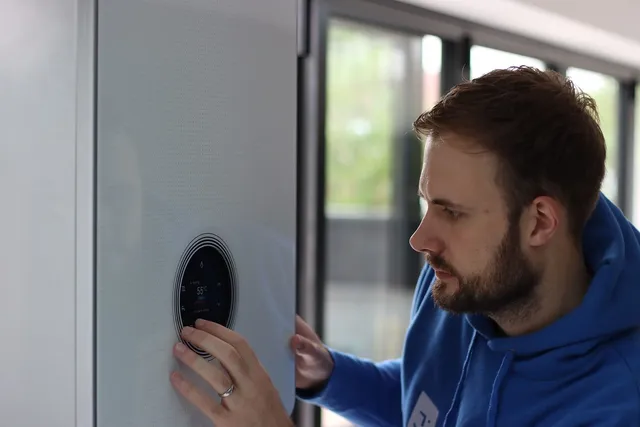
If you have found this page, the gauge on the front of your boiler is probably sitting in the red and the boiler is refusing to fire. The good news: topping the pressure back up is a five minute job you can do yourself, and we will walk you through it. The more useful news: a boiler losing pressure is never doing it for no reason. Sealed heating systems do not use water up. If the pressure is dropping, water is getting out somewhere, and the real fix is finding where.
We will cover both: how to repressurise safely, and how to work out whether you have a one-off or a fault.
What the pressure gauge is actually telling you
A modern combi or system boiler runs a sealed circuit of water round your radiators. That circuit needs to be pressurised, typically between 1 and 1.5 bar cold, for the pump to circulate properly and for the boiler to be confident it is full of water. Drop below about 0.5 bar and the boiler locks out as a safety measure, usually with a low pressure fault code on the display.
The system is sealed, so in a healthy installation the pressure barely moves from one month to the next. Which is exactly why a falling gauge matters. The water has to be going somewhere.
The usual suspects
After years of these call-outs across Greater Manchester, the causes rank roughly like this:
A weeping pressure relief valve (PRV). Every sealed system has a safety valve that dumps water outside if the pressure climbs too high. Once a PRV has opened, it often never reseats perfectly, and it drips. Go outside and find the small copper pipe coming through the wall near the boiler. If it is dripping, or there is a limescale tidemark or green staining under it, your PRV is passing and your pressure is quietly leaving through the wall.
A flat expansion vessel. Inside or beside the boiler is a vessel with an air charge on one side of a rubber diaphragm. Its job is to absorb the expansion of the water as it heats. Over the years the air charge leaks away, and without it the pressure swings wildly: high when hot, forcing the PRV open, then low when cold. The tell-tale pattern is pressure that climbs sharply when the heating runs and ends up lower every time the system cools.
Radiator valves and unions. The joints at each end of every radiator are the most disturbed fittings in the house, knocked by vacuum cleaners, painted over, wound on and off. A slow weep here often shows as a small rusty crust or a drip mark on the floor rather than a puddle. Run a dry piece of kitchen roll around each valve and union, it will find a weep your eye misses. Bled radiators count too: every time you bleed air out, pressure comes down, so a system that constantly needs bleeding and topping up has a related problem.
Micro-leaks under floors and in screed. The one nobody wants. A pinhole in a pipe buried in a solid floor or running under boards can lose pressure for months with nothing visible, because the water wicks away into the floor. If your pressure keeps falling, every visible joint is dry and the PRV pipe is dry, this moves to the top of the list. It is more common than you would think in Manchester's older housing, where decades-old copper runs under suspended timber floors.
How to repressurise via the filling loop, step by step
You do not need an engineer for this bit, and you are nowhere near the gas side of the boiler. You are simply letting a bit of cold mains water into the heating circuit.
- Switch the boiler off and let the system cool for a few minutes. You want a cold reading on the gauge.
- Find the filling loop. Usually a short braided silver hose beneath the boiler connecting two pipes, with a small valve at one or both ends. Some boilers (many Worcester and Baxi models) have a built-in filling key or lever instead, in which case the manual shows the routine and it takes seconds.
- Check the hose is connected at both ends. On some installations the loop is left detached, in which case hand-tighten it onto both valves first.
- Open the valve slowly. Turn the small handle (or use a flathead screwdriver on the slotted type) a quarter turn. You will hear water flowing.
- Watch the gauge. Let it climb to about 1.2 bar, then close the valve firmly. Do not overshoot, more is not better, and above 3 bar the PRV will just dump the excess outside.
- Disconnect or fully close the loop. A loop left open lets mains pressure creep into the system.
- Switch the boiler back on and reset the fault code if it does not clear itself.
If you have just bled radiators, a top-up afterwards is normal and nothing to worry about.
When topping up stops being the answer
Here is the honest threshold we give customers: once or twice a year is life. Monthly means something is weeping. Weekly, or a boiler that is back in the red overnight, means you have a genuine fault, and every top-up is now doing damage of its own. Fresh mains water brings dissolved oxygen and minerals into the system, which corrodes radiators from the inside and breeds the black sludge that kills pumps and heat exchangers. Constant topping up literally shortens the life of your boiler.
At that point it wants diagnosing properly. Checking the PRV, testing and recharging the expansion vessel, and pressure testing the system are bread and butter jobs for our boiler repair manchester engineers, and most pressure loss faults are found and fixed in a single visit. An expansion vessel recharge in particular is a cheap fix that solves a huge share of these cases, and it is one of the things checked during a routine boiler service manchester anyway.
If the boiler itself checks out and the loss is out in the pipework, that becomes a leak-finding job. We trace hidden weeps under floors and in walls with thermal imaging and moisture readings before lifting anything, as part of our leak repair manchester service, so the hole in your floor matches the hole in your pipe rather than a guess.
A quick word on winter
We see a spike in low pressure lock-outs every cold snap, and not all of them are leaks. Frozen condensate pipes and pressure faults get mixed up because both stop the boiler on a frosty morning, so check the fault code before assuming. And if your pressure has been marginal all autumn, sort it before December. The system works hardest in cold weather, the expansion swings are biggest, and a boiler that limps through October tends to give up in the first proper freeze, which is exactly when you least want to be waiting for a repair.
Top it up today by all means, that is what the filling loop is for. Just do not let the top-up become a routine. If the gauge keeps falling, give us a ring on 0161 533 0201 and we will find out where the water is going.
Frequently asked questions
What pressure should my boiler be at?
Most boilers want between 1 and 1.5 bar when the system is cold. The gauge will rise a little when the heating is running, up towards 2 bar, and that is normal. Below about 0.5 bar most boilers lock out and refuse to fire. Above 2.5 to 3 bar the pressure relief valve starts dumping water outside. Your manual will give the exact figure, but 1.2 bar cold is a safe target for almost everything.
Is a boiler losing pressure dangerous?
Not in itself. The boiler will simply lock out when the pressure drops too low, which is inconvenient rather than dangerous. The risk is what the pressure loss is telling you: a hidden leak can quietly damage floors, joists and ceilings for months before you see any sign of it. That is the reason not to just keep topping up.
How often is it normal to top up boiler pressure?
A well sealed system should hold its pressure for months, realistically once or twice a year with the seasons is nothing to worry about. If you are topping up monthly, something is weeping. If you are topping up weekly or the pressure drops overnight, you have a proper leak or a failed component and it wants looking at.
Can I repressurise the boiler myself or do I need an engineer?
Topping up via the filling loop is a homeowner job and completely safe, it is just letting cold mains water into the heating pipework. You are not touching the gas side of the boiler at all. Anything beyond that, replacing valves, recharging the expansion vessel or opening the boiler casing, is engineer work, and anything gas-side is carried out by Gas Safe registered engineers only.
Why does my boiler lose pressure only when the heating is on?
That points at the expansion vessel or the pressure relief valve. When the water heats up it expands, and if the vessel cannot absorb that expansion the pressure spikes, the relief valve opens and dumps water outside, and when the system cools the pressure ends up lower than it started. Look for drips from the copper pipe that exits through your outside wall while the heating runs.
Services that can help
Need a plumber in Manchester today?
Call us for a fast, honest quote. We cover Greater Manchester 24 hours a day, and we answer the phone.